




























 Login



EnviroMail™ 170 Australia
Revised asbestos testing under AS 5370:2024
ALS is now accredited for asbestos testing under the revised AS 5370:2024 standard, providing an expanded scope to support occupational hygiene and risk assessment across Australia.
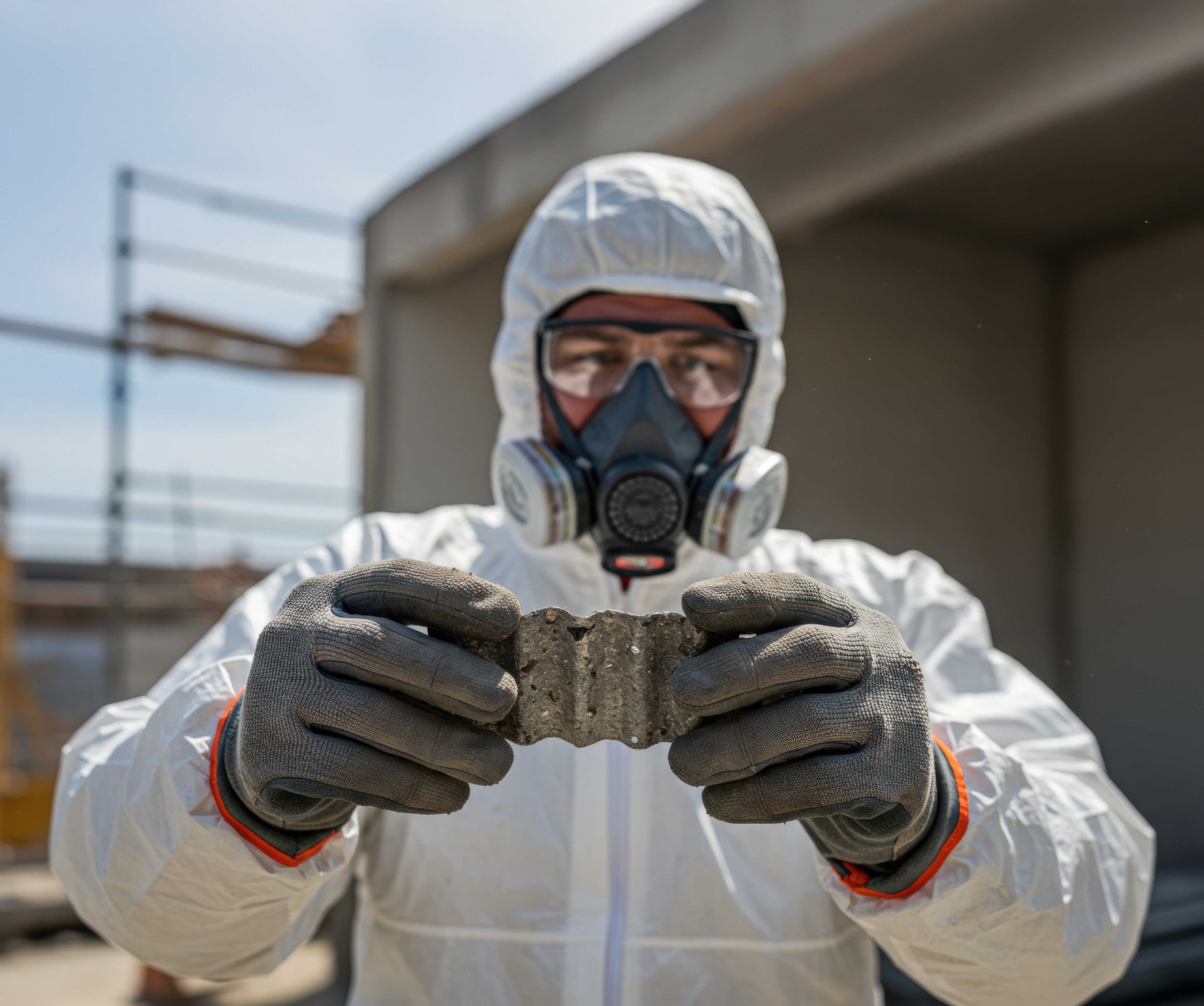
In 2024, Standards Australia released an updated asbestos testing standard, AS 5370:2024, Sampling and Qualitative Identification of Asbestos in Bulk Materials, in collaboration with local government stakeholders. The revised standard was developed to modernise asbestos analysis in Australia and align laboratory practices with contemporary analytical approaches. AS 5370:2024 supersedes AS 4964:2004, Method for the Qualitative Identification of Asbestos in Bulk Samples, which had been the primary analytical method used across Australia for bulk asbestos identification.
AS 5370:2024 introduces several significant updates that improve the robustness and defensibility of asbestos analysis and reporting. The revised framework enables consultants and regulators to interpret results using a more risk-based assessment approach, rather than relying solely on the historical zero-tolerance model.
ALS recognises these changes and has expanded its scope of accreditation to provide testing under both AS 5370:2024 and AS 4964:2004.
Asbestos regulations in Australia – building on AS 4964:2004
Implementation of the standard is supported by broader regulatory initiatives. Under Phase 3 of the Asbestos National Strategic Plan (ANSP), it is estimated that approximately six million tonnes of asbestos-containing materials remain in the Australian built environment and have yet to be removed or safely disposed of in landfill. Australian laboratories continue to identify asbestos in imported products that were previously assumed to be asbestos-free. These discoveries have reinforced the need for more sensitive and reliable analytical techniques.
While AS 4964:2004 has historically served as the primary analytical method, its limited guidance for analysing soil and other complex matrices resulted in variations in methodology and interpretation between laboratories. AS 5370:2024 addresses these gaps by providing more prescriptive methodology and clearer analytical pathways. It also brings Australian laboratory practices closer to international approaches, including alignment with ISO 22262-1:2012.
Changing practices in asbestos assessment
AS 4964:2004 was primarily designed to determine the presence or absence of asbestos in bulk and relatively homogeneous materials. This reflected the historical regulatory position in Australia that any detectable asbestos was considered unacceptable, leading to a largely zero-tolerance approach to reporting.
However, this framework limited the ability to apply modern risk-based assessment approaches, particularly when dealing with complex environmental matrices such as soils. These limitations were a key driver for the development of AS 5370:2024.
Both standards continue to place strong emphasis on polarised light microscopy (PLM) as the primary analytical technique, with AS 5370:2024 additionally recognising the use of scanning electron microscopy (SEM) and transmission electron microscopy (TEM) as complementary methods. These techniques allow laboratories to identify additional asbestos fibre types, many of which are difficult to conclusively identify using PLM alone, while providing greater analytical certainty.
The introduction of clearer methodology for soil and fine particulate matrices, combined with greater procedural standardisation, allows laboratory results to be more directly comparable. This improves confidence in analytical data for consultants, occupational hygienists and risk assessors, while supporting more consistent regulatory decision-making.
Key differences between the standards include:
- Expanded testing beyond bulk materials to include soil matrices.
- Formal recognition of SEM and TEM as complementary analytical techniques.
- Expanded target asbestos minerals, including tremolite, actinolite and anthophyllite.
- Greater standardisation of laboratory workflows and analytical processes.
- Clear reporting limits, replacing previous allowances to report according to local government guidelines.
While laboratories and regulators across state and federal levels adapt to the revised standard, AS 5370:2024 and AS 4964:2004 remain available as analytical tests, with AS 4964:2004 expected to be gradually phased out.
Clients should consult their local regulator to confirm that testing is conducted using the appropriate standard and reporting limits for their regulatory and project requirements.
Sample analysis and method codes
All asbestos bulk samples must be analysed by a NATA-accredited laboratory in accordance with AS 5370:2024 or an equivalent recognised method.
Our in-house method is fully compliant with AS 5370:2024. Method EA199 uses polarised light microscopy and dispersion staining for the qualitative identification of asbestos fibre types, including amosite, chrysotile and crocidolite. EA200 remains the method code suite for applications under AS 4964:2004.
Clients are encouraged to consult their local regulator to confirm whether the applicable limit of reporting is suitable for their specific regulatory or project requirements.
ALS currently offers asbestos testing under both standards through its Melbourne, Victoria, and Newcastle, New South Wales laboratories.
Table 1. ALS test parameters for asbestos testing under AS 5370:2024.
| Test parameter | Code | LOR |
| Asbestos – Presence/Absence in Bulk Solids (boards, tiles, gaskets, etc.) |
EA199B | Presence/Absence |
| Friable Asbestos (FA+AF) – Weight and % as Asbestos in Soil* |
EA199F | 0.001% w/w |
| Asbestos – Presence/Absence in Soil (including free fibres) |
EA199G | Presence/Absence (0.01% w/w) |
| Bonded (Non-Friable) ACM Determination plus Asbestos Estimation (includes sieving to 7 mm)* |
EA199N | 0.01% w/w |
| Friable Asbestos (FA+AF) – Weight and % as Asbestos in Soil* | EA199N | 0.001% w/w |
| Asbestos in Water – Presence/Absence* | EA199W | Presence/Absence |
* Not NATA-accredited.
Get in touch with us
By aligning our asbestos methods with international frameworks, ALS delivers trusted insights that support confident compliance and risk assessment strategies.
Contact your ALS project manager for more information about asbestos testing under AS 5370:2024.